
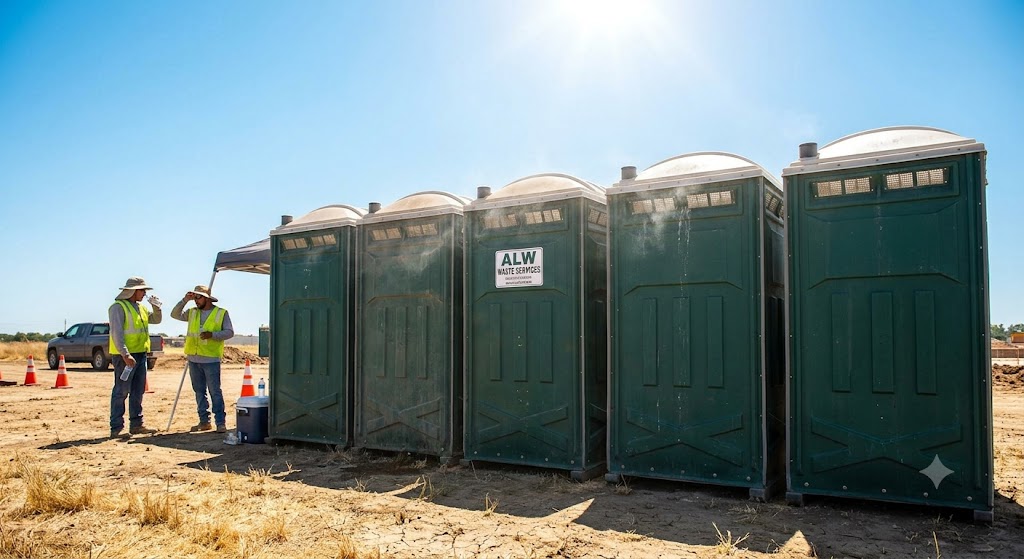
Keep your customers satisfied with your service during the hottest months with safe, fresh, comfortable, odor-controlled portable toilets.
Summer is for weddings, festivals, sports events, and other outdoor occasions, as well as increased construction. But, the season also brings special challenges to maintaining optimal sanitation and protection of portable toilet units. Sun exposure and high temperatures can cause portable toilets to develop strong odors and high humidity inside the units. These bad conditions can discourage guests and workers from using the portable facilities. The summer service practices below will help keep your rental units reliably fresh for users and help protect your reputation as a provider.
Prepping Portable Toilets for Summer Conditions
To get your portable toilets and delivery systems ready for summer, focus on reducing the effects of direct sunlight, heat, and high humidity, and on storm protection. These efforts help provide the best possible user experience and protect the condition of the units:
Reduce Heat Build-Up and Humidity
Strategies to make portable restrooms more comfortable for users during summer months include these methods to reduce heat build-up and extreme humidity inside the units:
Optimize unit placement.
Look for shaded areas to place portable toilets. Locate the units under trees, along the sides of buildings, under canopies, or elsewhere out of direct sunlight to minimize the temperature inside the units.
Increase air flow and ventilation.
Invest in portable toilets designed with built-in vents, if possible. Or, upgrade existing units with added air circulation systems. Clean the vents routinely to prevent clogging with dust and dirt, especially during humid periods.
Increase odor control agents.
In high temperatures, waste breaks down more rapidly. That can generate strong odors unless managed diligently. Use eco-conscious, high-potency deodorizers and fragrance products formulated for effectiveness in hot weather.
Increase cleaning.
It may be hard to improve on your already meticulous cleaning process. However, heat causes bacterial breakdown to accelerate and generate odor. Increase the frequency of your cleaning to empty the waste tanks and disinfect touch-points.
Prioritize users’ comfort and hygiene.
During extremely hot weather, stock extra toilet paper, soap, and hand sanitizer. Keep all surfaces exceptionally clean. Consider switching to units with light colored exteriors that reflect more sunlight. Consider using portable fans in restroom trailers, as needed. Depending on the customer’s needs, preferences, and budget, consider providing climate-controlled restroom trailers.
Storm and Flood Preparations
To better protect your portable toilet units from destructive wind, flooding, lightening, or other serious weather conditions, implement these measures for storm preparedness:
Secure units against strong winds.
Use one or more of these three options (as applicable) to secure your portable toilet units in preparation for an approaching potentially damaging storm:
- Tie Down: Use heavy straps, cable, chains, or ropes to tie each unit to a sturdy fence, tree trunk, post, wall, or other stable structure.
- Weigh Down: Use sandbags, concrete blocks, gravel bags, or other weight on the floor in each toilet unit to help secure the units in high wind.
- Lay Down: For the most extreme circumstances, such as a tornado warning (time permitting) or approaching hurricane, empty the units entirely and lay them flat on the ground with doors facing downwind.
- Relocate behind a windbreak. Move the units to a spot sheltered from the wind. Group multiple units together if possible to create a block that multiplies their individual weight for greater wind resistance.
Secure doors against damage.
Lock the doors. Tie rope around the units to prevent the doors from opening and being caught by the wind. If possible turn the units to position the doors facing a solid wall, fence or other stable surface.
Protect units from heavy rain and flooding.
- Cover toilet units. Cover the portable toilets with waterproof tarps to deflect heavy rain and protect from excessive pooling of water against the bottoms of the units.
- Elevate the units. Move units from low-lying ground where flooding or standing water is more likely and place them on elevated areas.
- Dig drain trenches. Dig shallow drainage trenches around toilet units that are stationed on grass or dirt areas to catch and redirect rain water buildup away from the units.
Protect units from lightning strikes.
Avoid using units and do not encourage others to use the units for shelter during a thunderstorm. Portable toilets are not grounded and are therefore hazardous in such weather conditions.
Ventilate after a storm.
The high humidity that naturally follows summer storms promotes rapid growth of bacteria. After a storm, open vents in the units and inspect interiors for moisture. If possible, leave doors open for a brief period to help drying, or use a portable dehumidifier if needed, if there is access to electricity.
Clean up and disinfect after the storm.
If rainwater has splashed dirt and dust onto the exteriors of the units and/or the walkways entering the units, the area can become slick and hazardous. Heavy dirt left on the units is also abrasive and can dull the finish, degrading the appearance and value of the rental product. After a storm, wipe interior surfaces with a disinfectant and wash dirt from the exteriors.
Optimize Summer Operations
Use your existing business software platform to organize your project of summerizing your rental units that are out on customers’ sites as well as your inventory stored outdoors. Develop an efficient summer maintenance and storm prep checklist.
Prioritize Dispatch Efficiency
Use one of the various route planning software programs with mobile tracking. These tools can help drivers focus fully on their emergency service work before and/or after summer weather events like severe heatwaves or storms and avoid simultaneously struggling to complete quickly growing numbers of paper service tickets in real-time.
Restock supplies more frequently.
Throughout the high season, maintain an abundant stock of supplies at each unit. Include toilet paper, soap (if applicable), and hand sanitizer. Keep an overstock of these items as well as deodorizer and other high-turnover supplies on hand at your shop.
Inspect safety equipment.
Equip all service technicians with PPE. Include high-visibility vests, nitrile gloves, respirators, and other standard requirements under your company policy and your state and local regulatory jurisdictions.
Summer is Your Season – Bring It On!
Keeping portable toilets in good condition during hot summer weather often requires the entire array of methods recommended above. Proper placement, ventilation, and service frequency all add up to deliver the level of comfort necessary for a positive user experience on hot days. With these quality management processes and the recommended storm prep measures, portable restroom service operators can keep their rental units clean and safe for users at public events, private celebrations, and construction sites throughout the season.