
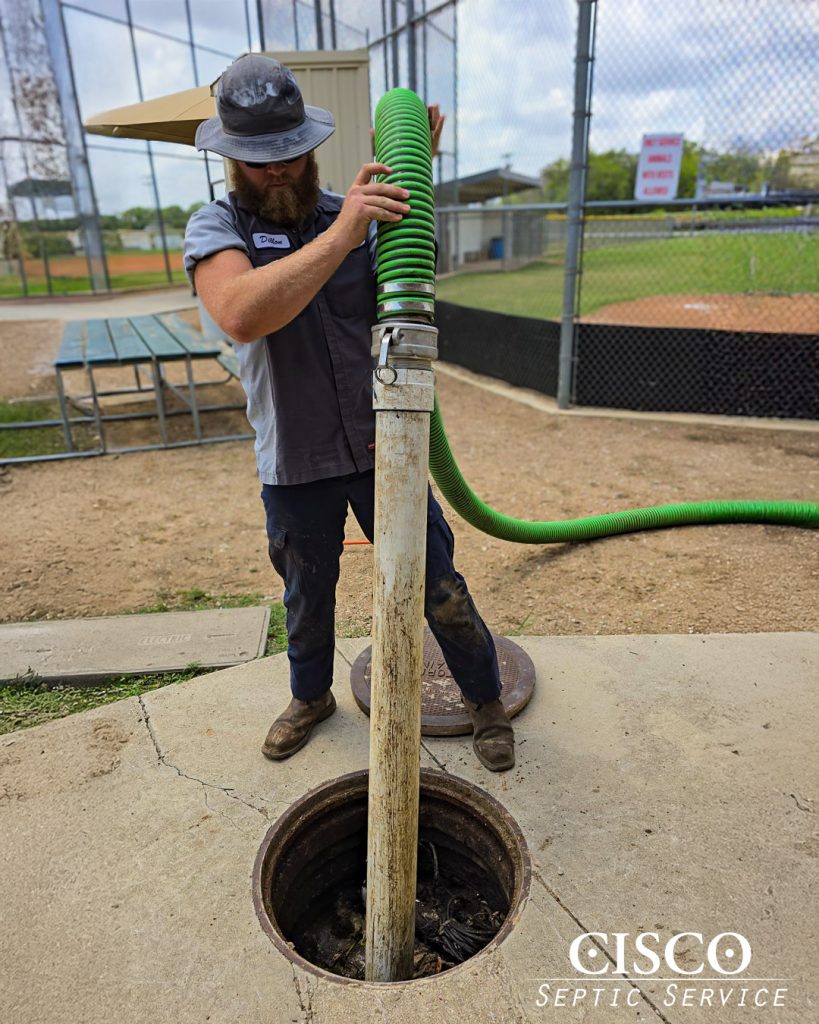
A serious and under-discussed challenge for septic tank pumping operators in some US regions is consistently finding dumping sites with available capacity within reasonable distances. Talking with operators who routinely struggle with this situation, with long-time pros who’ve learned to leverage partial fixes, and with the producers of a robust new solution, we’ve learned key ways to manage the difficulty through a combination of strategies.
Operational Challenges in Septic Tank Waste Disposal
When an inexperienced industry watcher thinks about the kinds of difficulties a septic service operator may encounter, those probably include complications onsite, like a blockage in the pipes, a cracked septic tank, or damage to a component. Those kinds of problems necessitate remedial action to prevent contamination of the surrounding environment and added time and work to complete the pumping process.
So, yes, those are troublesome issues faced by septic service workers while they’re on a customer’s site, before they set out to complete the next challenging phase of the service — successful waste disposal. In this serious step of the process, the problems for septic tank pumpers are much more frequent and far-reaching and can be even harder to resolve over time than the odd septic equipment repair or replacement.
Notwithstanding the predictable septic equipment problems, labor shortages, and routing errors that cause longer driving time and higher costs, there have developed deeper, more fundamental daily difficulties for pumpers that are not avoided by ideal septic system care, staffing, and routing. These are:
- High Risk to Transportation Safety: Operators must transport tons of waste per load, while diligently performing all known measures to reduce the danger of hauling such extreme weight. This includes employing all procedures for safe handling of waste, minimizing the risk of chemical reactions in the waste tank, special maintenance, and others.
- Hauling Hazardous Waste: Waste from septic tanks is classed as biohazardous material. So, demanding protocols are required to prevent exposure of operators or the public to the dangerous contents during transport and dumping.
- Burdensome Administrative Work: Continuously seeking dump sites that agree to take waste loads, obtaining and organizing all the required licenses and permits for dumping in various cities and counties, and maintaining the proper paperwork for all occurrences of dumping at all locations generates a large amount of document management responsibility.
- Ever-Increasing Disposal Costs: The combined costs of liability insurance, tank truck maintenance, fuel, dumping fees, labor hours, and other associated costs of excessive vehicle wear and travel distance for heavy hauling can diminish the profitability of a septic service business.
Regulatory Requirements for Liquid Waste Handling
There are strict laws governing the handling and transportation of waste. Operators undertaking disposal of septic tank contents after pumping must complete the transport and dumping of the waste safely and prevent any spillage or chemical reactions in or around the tank. The operator must comply with all local and state guidelines, rules, and regulations for transportation, handling, and disposal of the waste.
Further, the operator must also be familiar with updates to the sometimes widely varying local waste disposal requirements between city, county, and state governments. Those can include maintaining current specified licenses and permits for transporting waste and meeting permit requirements of the individual disposal facilities.
All together, these requirements add up to a tough logistical challenge. Some of the steepest uphill battles for operators include:
- Searching to find authorized disposal sites that have available capacity for their tank loads.
- Obtaining permission to dump loads at those facilities before they can start traveling to the disposal site.
- Gathering, executing, and maintaining thorough documentation of waste type, dumping destination, etc. for every load.
At the Core of the Disposal Problem
Chris Sobczak, Owner of Pro Septic LLC, a thriving company serving central Wisconsin, is a septic industry expert who recently shared some knowledge on this issue based on the extent of the problem in his own region and others of which he’s aware, such as northern Wisconsin, where he said the situation is even worse than in his area. He described a problem we’ve heard about nationwide. “Waste treatment plant facilities still in operation today were built 30 to 50 years ago. They were designed for a certain maximum capacity of the waste stream. But, now the cities they were built to service have grown, outgrown the aging facilities.”
So, more residential and commercial waste is coming into the treatment plants. They have to treat more of their rate-payers’ sewage. That means they have to take less from outliers like septic tank waste haulers from the rural areas. In Chris’s area, there once were no limits on the amounts septic services could take to the local plants, whereas now they may be limited to no more than one load per day. Septic tank pumping services, like Pro Septic, with land application licensing fare better than newer businesses without that option.
As Chris said, “Treatment plant operators explain that the cost to renovate a plant is astronomical. The treatment facilities in the big cities are huge and have a lot of money. But, smaller cities out in areas like mine have 20 to 30 thousand people and limited money. So, the sewer plant is the last place that money goes.”
Chris further noted that adding to this severe waste treatment capacity shortage, the DNR’s growing concerns about PFAS plastic contaminates and reducing phosphorus limits worsen the consequence for waste haulers, which is a higher cost for waste treatment at the plants and reduced amounts of waste that can be accepted by the plants from waste haulers.
Solution in Process Modernization
There is an emerging awareness of the new alternative to searching for elusive waste disposal locations in areas with dense populations and outdated sewage processing plants. That alternative represents a paradigm shift in septic tank pumping equipment and waste handling. It means switching to onsite filtration of septic tank waste — an ultra-modern process that returns the water back into the septic tank filtered at 100 microns, which is on par with the water quality emitted onto the drainfield.
This exciting solution provides the needed relief for operators who are sometimes driving outrageous distances to dump wastewater loads. However, the upfront cost is high, about $70k more in purchase price than a new traditional model pumper truck. But, the cost savings in time regained for serving more customers per day and the fuel savings and dumping fees saved can all add up to a full financial recovery for many new owners of the state-of-the-art filtration truck within the first 12months or so of use.
This method is the way of the future for the septic tank service industry. Septic service business owners positioning to add a truck to their fleet are well advised to educate themselves on this key alternative. The filtration trucks offer additional time-, work-, and sales-saving advantages.
Those include two tanks, one for filtration, and one for hauling — to accommodate customers who are not readily able to accept the information on the superior septic health and cost savings benefits to them in making this service type change. So, no customers are lost to failed attempts to sell the new concept. The cutting-edge technology of the revolutionary septic service trucks also comes with incomparably effective patented grease trap cleaning technology, auto-retractable hoses, and more.
The Future of Septic Tank Waste Disposal
One may be very dug-in in terms of commitment to stay the course with his/her existing tank pumping service equipment and process. Plus, even for the willing, spending a lot of extra money upfront for a new tank truck may seem infeasible.
On top of all that, the notion of doing the work to educate and convert customers to a new, unfamiliar way of doing things may feel like just too much to take on. You can rightly predict that you’ll face a lot of rejection of the idea from property owners who just don’t like change or can’t get their minds around the need for it or the superior benefits of it for themselves.
Many may argue aggressively, though perhaps futilely, that small and large cities alike in their regions should take the responsibility for providing septic waste haulers as much freedom as they need to dump their loads, regardless of the overwhelming cost of expanding and upgrading waste processing plants or building new ones.
At this juncture, maybe the only thing on this topic on which all can agree is that it’s obvious enough that change is needed in many areas of the country to solve this growing situation. It’s fair to say that, more accurately, change must happen sooner rather than later in too many areas.
That’s because the alternative now imposed on so many struggling operators is already ridiculous. It’s untenable, at least for those business owners, to allow it to keep growing worse at the current rate without doing anything to manage it at their level.