
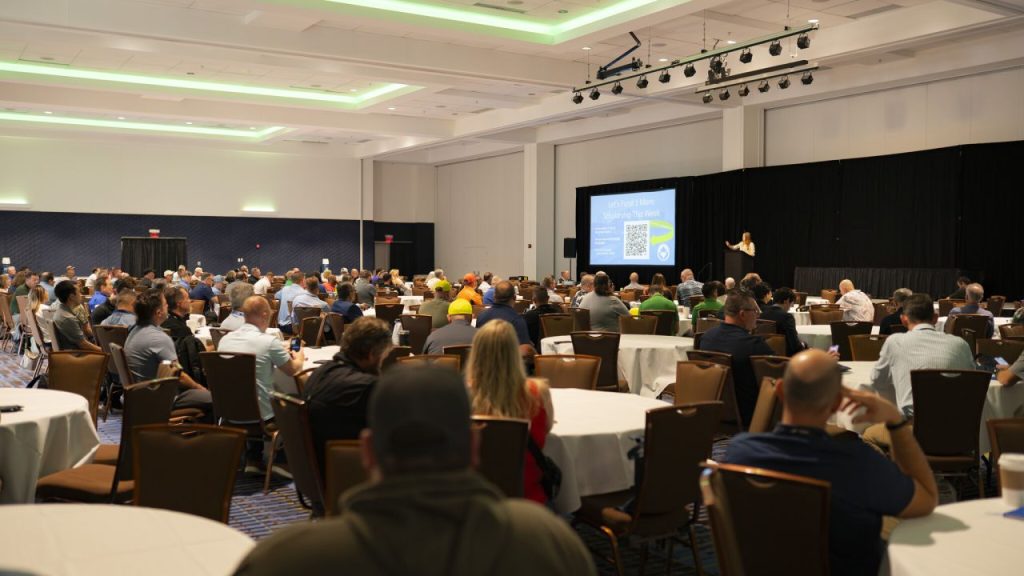
Industry expert, Will Niccolls, Owner, Green Latrine, Seattle, WA, attended the 2025 Portable Sanitation Association International (PSAI) show in Florida in early November. Between the many equipment and supply vendors and service company operators, a vast wealth of knowledge was shared across the gamut of industry interests, from technological innovations to improved service practices. Here, Will reflects on his experience at the tradeshow and offers ALW readers an abundance of exceptional take-away information from discussions of one of this year’s most popular topics for discussion at the event — workplace safety and OSHA compliance:
Will Niccolls – A Word on the National PSAI Event
Unparalleled Learning Opportunities for Portable Restroom Services Teams
We’ve had great success taking people from our company to this and other PSAI events. (Like “the Edge PSAI in Scottsdale, AZ. We took 7 people to that one.) Exposure for our team to the learning opportunities at these events has been a wonderful investment for us. Instead of just taking the senior people, having more of the team getting exposed to the concepts presented is very valuable to us. They’ve been getting to hear solutions from other operators in other parts of the country who are experiencing the same challenges and are interested in the same issues.
Workplace Safety and OSHA
PSAI Takeaway & Wisdom from Industry Expert, Will Niccolls
Combining discussion points from the PSAI event and Will’s deep knowledge of worksite safety in portable restroom placement, use, and maintenance, he recommends that operators focus on these five key points:
1. Portable Toilet Placement
Unit placement is probably the most important piece of the process. There are lots of considerations from the users’ side and technicians’ side. The more factors considered in advance, the better the placements of units will be.
- Easy Access: Toilet units can be placed farther from users where it’s preferred that they’re out of sight at events where people don’t want to see them, such as weddings, parties, etc. But, on jobsites, it’s a very good idea to provide handy access. Per OSHA, toilets must be readily accessible, and never unreasonably restricted, within 200 feet horizontally from every worker on the jobsite.
- Hazard-free: Where there is potential for hazards to develop from weather, such as mud, ice, or snow in northern climates, both users and service techs need to be able to access them safely, and with as little disruption to others as possible. For example, a big portable toilet service truck should not be in the way of neighbors.
- Lighting: Ideally, you can place units under a streetlight, work light, or other overhead light. Or, you’ll need to employ some other means of bringing light into areas where toilet units are placed to prevent trip or fall hazards. Per OSHA, toilet units must be well lit, including during evening work.
- Hose Length: Most portable toilet trucks carry 20-60 feet of hose. The toilet units have to be placed within one vacuum hose length, where the pump truck can be parked on level ground for servicing each unit on the site. If not, the volume of waste in the tank won’t allow optimal filling and the operator may have issues servicing all the units.
2. Personal Protective Equipment
Your company policy on PPE may differ from the job site requirements of a specific client. High-visibility clothing, such as a vest, T-shirt, or jacket may be required, as well as eye protection and/or ear protection. One client we have specifies the kind of hard hat our technicians are required to wear. Another requires our techs to get certified by their safety officer and to put their job site safety sticker on our hard hats.
Under OSHA regulations, employees servicing portable toilet units on worksites must wear the proper PPE. That includes safety glasses, boots, and gloves. In some cases, it may also include face shields, or even respirators.
3. Equipment Selection
You may be bringing standard portable toilets or rolling elevator units on casters that you can wheel into an elevator in a high rise. Whatever units you have, they are probably built to comply with federal OSHA rules and regulations. But, individual state requirements may vary. They may require, for example, that the units be completely enclosed. So, your units may meet OSHA regs but not meet your own state’s legal requirements. Ensure the units you order comply with all laws from all governing oversight agencies — local to federal.
Another caveat, different requirements may apply to the design, placement, and maintenance of units for some purposes. For example, an OSHA-approved flyable toilet unit may be required to have handwash containment trays. Or, there may be specs on how it is to be connected for lifting on a tower crane (metal harness, etc.)
Or, where units are used on some large building sites, like a new hospital, skyscraper, public works project, bridge construction job, etc., the project is likely to have its own safety compliance officer. Your portable sanitation team should coordinate with that individual to ensure you are abiding by any unique safety requirements of that individual site.
4. PSAI Guidelines and Industry Best Practices
Association guidelines, industry Best Practices, other industry standards, and certification training criteria for service technicians are all critical to safety on job sites and to ensuring OSHA compliance. From laws on adequate ventilation to mitigate odors to PPE and safety training for service workers handling the units, to equipment maintenance training, to keeping clean, sanitary, stocked units, your team should be familiar with all federal regulations to ensure compliance.
That may come, in part, from PSAI or other organizations. Larger construction contractors often do their own training. They may even require toilet rental providers to send their techs to their in-house safety compliance training.
5. The Vacuum Pump Truck
As for the pump truck itself, it’s a top priority to keep the trucks safe by doing all preventive maintenance promptly and all other tasks to keep the pump and the truck’s overall functioning in excellent condition. Because no jobsite supervisor would allow an oil leak from a portable toilet service truck, or, worst-case, a waste compartment leak. OSHA requires a strict routine of waste disposal that is in compliance with local laws.
Best Practices and OSHA Regulations
Before You Place and Maintain Portable Rental Toilets on Jobsites
OSHA regulations govern portable rental toilet operations on worksites, and those supersede generally accepted industry practices, contractors’ internal site safety policies, and toilet rental businesses’ operating standards. Violating OSHA requirements for portable toilet management on a jobsite can lead to substantial financial penalties. NOTE: It is recommended that you obtain adequate portable restroom business liability insurance to protect your company and yourself in cases of adverse outcomes due to accidental noncompliance.
Teaching the specifics of how to achieve and consistently maintain industry Best Practices and OSHA compliance is the domain of experts across the field of well-experienced portable toilet rental business owners, PSAI professionals, and other industry specialists. You are strongly advised to keep your knowledge updated from all these resources to capture the best and most current information and ensure the highest quality of performance by your team.
For information on future PSAI events, visit psai.org. For information about Will Niccoll’s Green Latrine eco-friendly solutions in portable toilet rental service, call 206-984-6931, or visit gogreenlatrine.com.